Key Takeaways
- The twitter trend algorithm prioritizes acceleration and novelty over raw cumulative tweet volume.
- Regional trending models rely on unique author ratios and geographic IP clusters to filter out unverified data-center traffic.
- Multi-dimensional co-engagement (original tweets, media quotes, retweets) signals conversational legitimacy to X's anti-spam pipelines.
- Strategic campaigns utilize direct Tier-1 infrastructure to manage delivery velocity and regional compliance safely.
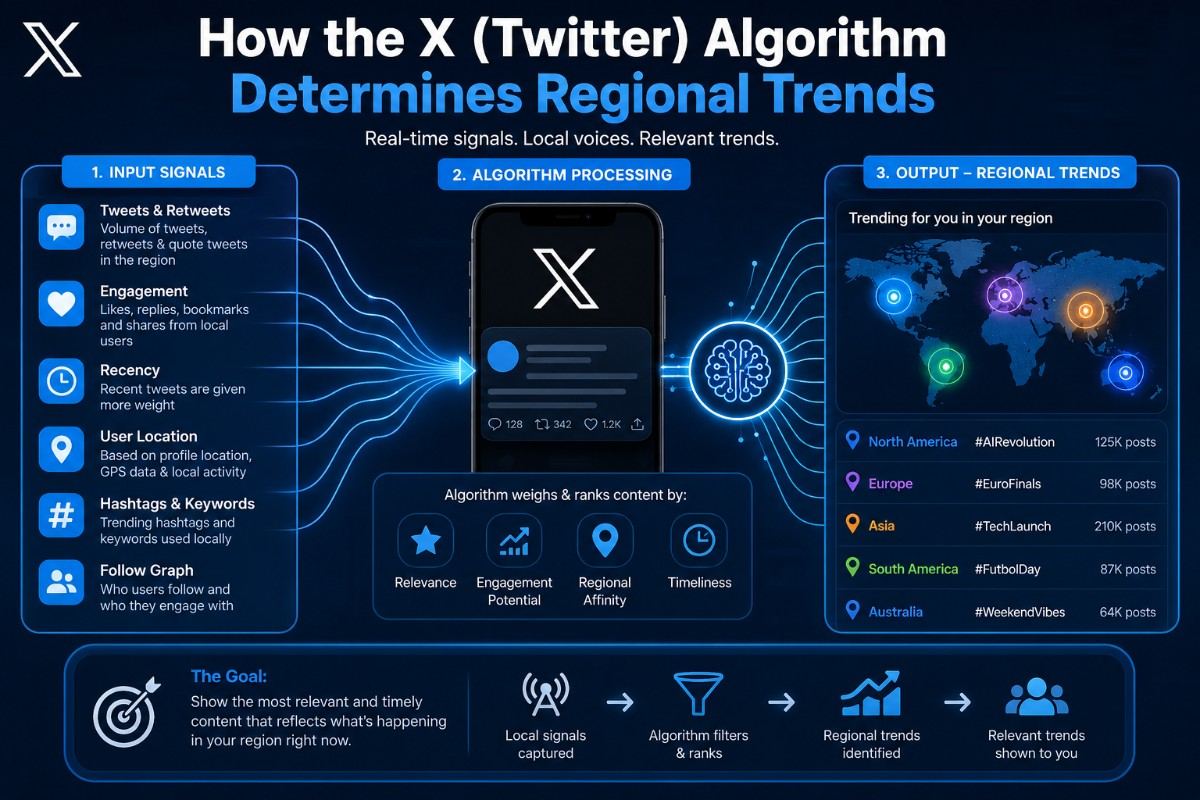
The "Trending Topics" board on X (formerly Twitter) represents one of the most dynamic real-time attention markets on the internet. Whether monitoring breaking news, public relations developments, or entertainment releases, ranking on the regional trending list delivers immense organic amplification.
However, many creators and marketers operate under the misconception that trending is merely a numbers game. In reality, the modern twitter trend algorithm is a sophisticated machine learning pipeline engineered to detect authentic emerging conversations while discarding low-quality automation.
Understanding the exact mechanics behind velocity thresholds, geographic clustering, and author density is essential for any brand exploring Twitter trending services. Here is a technical breakdown of how X identifies, ranks, and maintains regional trends.
1. Velocity vs. Volume: The Derivative Principle
A common question is why a topic with 5,000 tweets can rank higher on the "Trending in India" board than a topic with 50,000 tweets. The answer lies in calculus: X measures the first and second derivatives of conversation growth (velocity and acceleration).
- Baseline Volume: Evergreen topics (such as daily greetings or recurring sports discussions) maintain a steady baseline. Because their growth rate remains flat, the algorithm assigns them a low novelty score.
- Velocity Spike (First Derivative): The rate of new tweets per minute compared to the topic's historical average.
- Acceleration (Second Derivative): How quickly that rate of change is increasing over a rolling 15-to-30-minute observation window.
When a conversation exhibits a sharp inflection point, the recommendation engine flags it as an emerging topic, instantly giving it precedence over larger, stagnant discussions.
2. Unique Author Density and Co-Engagement Signals
X's discovery systems do not treat every tweet equally. To prevent individual accounts from gaming the system, the algorithm applies heavy normalization based on author diversity.
The Unique Author Ratio
If 100 accounts publish 30 tweets each to generate 3,000 posts, the system recognizes a high repetition anomaly and deprioritizes the hashtag. Conversely, if 2,500 unique accounts publish 1 to 2 distinct posts each, the unique author density is high, signaling widespread participation.
Triangulated Co-Engagement
Modern ranking models analyze the relationship between interaction types:
- Original Posts vs. Retweets: A healthy trend requires an organic ratio of original text posts, media attachments, and quote tweets alongside direct retweets.
- Semantic Diversity: Duplicate phrases trigger automated spam filters. Natural trends exhibit lexical variations, regional colloquialisms, and conversational replies.
3. Geographic Clustering and IP Verification
Regional trending boards (such as "Trending in India" or city-specific feeds) enforce strict geographic filtering. The algorithm verifies location through multiple network indicators:
- Residential & Mobile Carrier Routing: Engagement originating from authentic mobile network operators (such as Jio or Airtel) carries significantly higher geographic trust than server-farm IP blocks.
- Historical Account Geolocation: Profiles with established localized activity patterns validate regional interest much faster than dormant accounts suddenly posting from overseas data centers.
- Community SimClusters: The platform analyzes network graphs to ensure the accounts discussing the topic are connected to regional interest communities.
Integrating Scalable Infrastructure Safely
Executing high-impact social campaigns requires precision timing, high author variety, and clean proxy routing. Sourcing backend execution through the best smm panel ensures that engagement meets algorithmic safety thresholds without triggering shadowbans or automated suppression.
By aligning your campaign with X's velocity models, ensuring high lexical diversity, and routing traffic through verified regional nodes, you can achieve sustainable trending visibility that translates into authentic organic discovery.
Frequently Asked Questions About the X Trend Algorithm

Sarthak has over 8 years of experience in scaling Indian social media brands. He specializes in high-retention growth strategies and monetization compliance. View Full Profile & Articles View Author Profile →