In the fast-paced Indian digital market of 2026, social proof is the ultimate currency. Whether you are a budding influencer in Mumbai or a D2C brand in Bangalore, your digital authority is judged by your numbers. However, thousands of users face the same frustrating cycle: they buy engagement, their numbers spike for 24 hours, and then—poof—everything drops.
If you’ve ever wondered why your "permanent" followers disappeared overnight, the answer isn't just "the algorithm." It’s the infrastructure. You are likely caught in the middle of the "Reseller Chain."
To scale safely, you must understand the mechanical difference between a Main Provider and a Reseller. This guide will pull back the curtain on how an smm panel actually works and how to identify the best smm panel for long-term growth.
The Architecture of the Industry: Who Actually Owns the Servers?
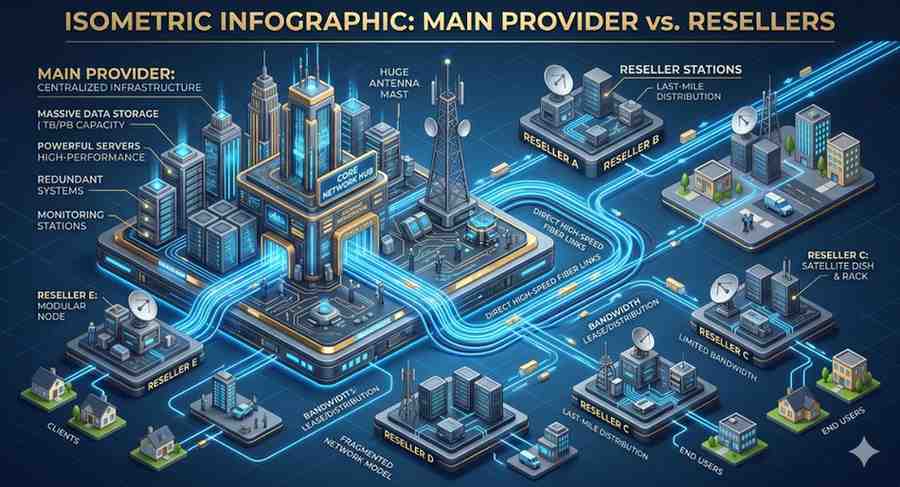
The social media marketing industry is structured like a pyramid. At the very top sits the Main Provider. These are the elite entities that own the actual server farms, phone farms, and residential proxy networks required to deliver likes, followers, and views.
1. What is a Main Provider?
A Main Provider is a source-level entity. When you place an order on their dashboard, the request is executed by their own internal software. They don't rely on anyone else to fulfill the order. Because they own the "factory," they have total control over the quality, speed, and retention of the service.
2. What is a Reseller?
A Reseller is a middleman. They do not own any servers. Instead, they use an API (Application Programming Interface) to connect their website to a Main Provider’s dashboard. When you buy from them, they automatically buy from the Main Provider, add a 200% to 500% markup, and keep the profit.
The "Drop" Mystery: Why Reseller Services Fail
The biggest complaint in the Indian market is "drops." You buy 10,000 followers, and 4,000 vanish within a week. While platform updates contribute to this, the primary reason is the Reseller Latency and Quality Mismatch.
The Latency Gap
Because a reseller’s site has to "talk" to a provider’s site via API, there is a delay. If the Main Provider updates their server to fix a bug, the reseller’s site might not update for hours. During that gap, orders fail, get stuck, or are delivered using outdated methods that the social media platforms easily detect and delete.
The Profit Margin Trap
To offer a cheap smm panel price while still making a profit, resellers often hunt for the cheapest possible source. This leads them to providers using "Data Center Proxies." These are cheap, low-quality bots that use the same IP address for thousands of accounts. Instagram and YouTube flag these IPs instantly, leading to the massive drops you see on your account.
How to Spot a Main Provider in a Sea of Resellers
In 2026, every site claims to be the "No. 1 Main Provider." Here is how to use your detective skills to find the best smm panel that actually owns its infrastructure:
- Service Logs & Latency: Check the "Order History" speed. A Main Provider’s orders usually start within seconds (Instant Start). Resellers often have a "Pending" status for 10-30 minutes while their API communicates with the source.
- The Price-to-Quality Ratio: If a panel is selling services for pennies, they are either a low-quality Main Provider or a reseller using "bottom-of-the-barrel" bot farms. A professional Main Provider like LuvSMM offers wholesale rates because they own the architecture, not because they use cheap bots.
- Custom API Features: Does the panel offer unique features like "Drip-Feed" or "Custom Comments"? Resellers usually have a limited, generic list of services. Main Providers offer granular control because they wrote the code.
Why Indian Agencies are Moving to Wholesale Infrastructure
For an Indian digital agency managing high-ticket clients, a service drop isn't just a minor annoyance—it’s a brand-killing event. If an agency uses a reseller and the services drop, they lose their client’s trust and their monthly retainer.
Elite agencies are now bypassing the "middleman" resellers and connecting their own internal software directly to a Main Provider’s API. This ensures:
- Residential Proxy Safety: Services are delivered using real-looking IPs, making them indistinguishable from organic growth.
- Higher Margins: By cutting out the reseller markup, agencies keep more of the budget.
- Refill Guarantees: Main Providers offer "Refill" buttons that actually work because they have the direct power to resend the data.
Choosing the Best SMM Panel for Your Brand
If you are looking for a cheap smm panel that doesn't compromise on quality, you need to look for "Wholesale Providers." Sites like LuvSMM bridge the gap by offering enterprise-level infrastructure at a price point that fits the Indian market.
When you use a Main Provider, you aren't just buying numbers; you are buying the technology that keeps those numbers stable. This is the difference between a temporary "spike" and a permanent "authority."
Frequently Asked Questions (FAQ)
Q1: Why are the followers I bought dropping after 24 hours?
This usually happens because you purchased from a reseller who sourced their followers from a low-quality bot farm. These bots use flagged IP addresses that social media platforms delete during regular sweeps.
Q2: Is it better to buy the cheapest smm panel services?
Not always. "Cheap" can be expensive if the services drop and you have to keep rebuying them. Look for a Main Provider that offers wholesale rates for high-retention (non-drop) services.
Q3: What does "Refill" mean on an SMM panel?
A refill guarantee means that if any of the followers or likes drop within a certain timeframe (usually 30 days), the provider will resend them for free. Only Main Providers can reliably honor these refills.
Q4: How can I tell if a panel is a reseller?

Sarthak has over 8 years of experience in scaling Indian social media brands. He specializes in high-retention growth strategies and monetization compliance. View Full Profile & Articles View Author Profile →